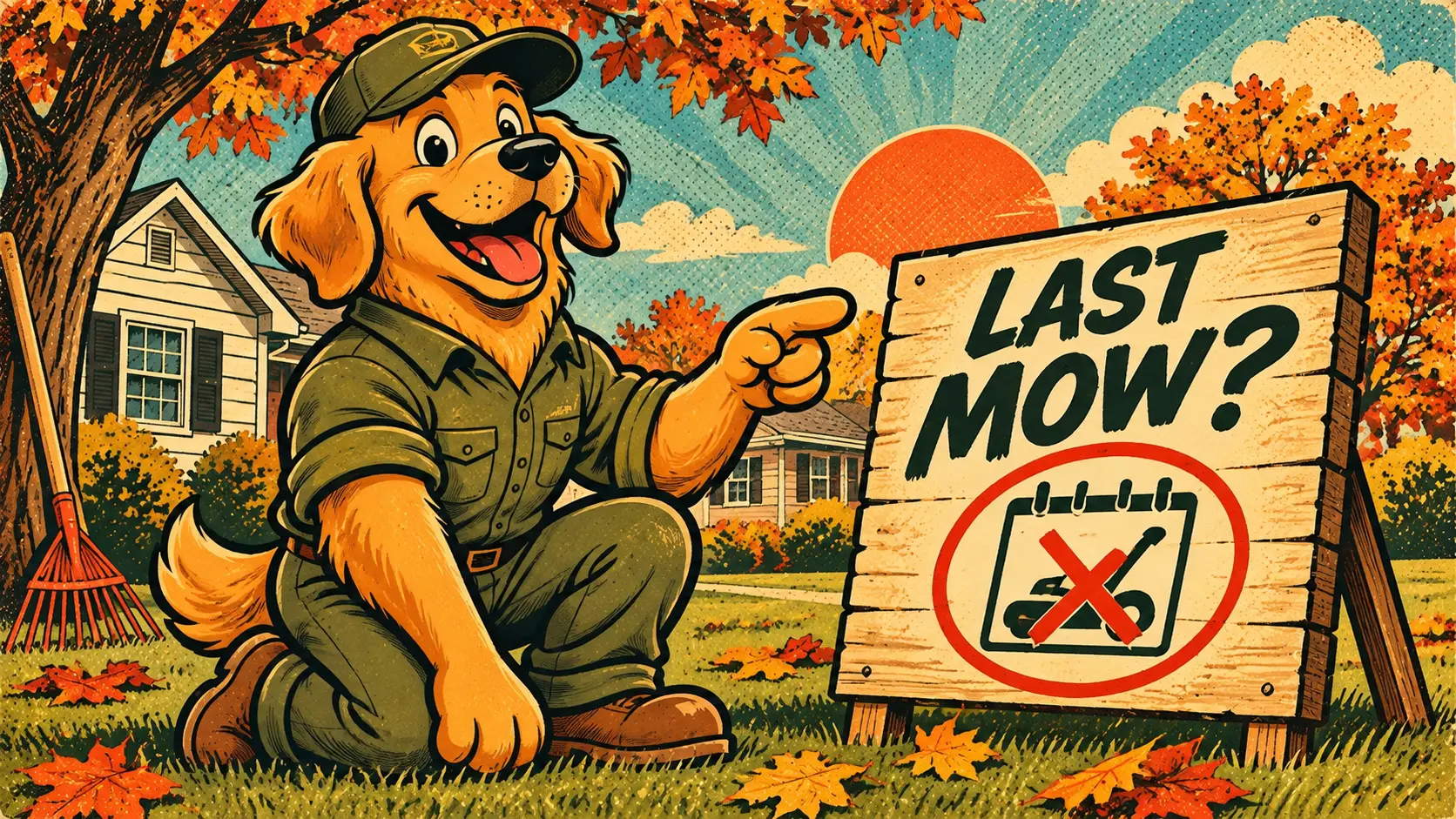
When should you stop mowing your lawn in Ontario?
In Windsor–Essex, there is no single date when every homeowner should put the lawn mower away. The best rule is simple: keep mowing while your grass is growing, and stop when growth has slowed to a halt. For many yards, the last cut happens in late October or November. A warm fall can stretch the season, while an early cold spell can shorten it.
If your grass is still getting taller between cuts, it may need another mow. If you check it after a week or two and it has barely grown, you are probably close to your final cut. Do not mow just because it is Saturday. Mow because the lawn needs it.
The weather matters more than the calendar. Avoid cutting grass when the ground is frozen, soaked, or covered with frost. Heavy equipment and even foot traffic can damage soft or frozen turf.
Why Windsor–Essex lawns may need a later final cut
Southern Ontario has a long growing season compared with much of the province. Windsor, Essex, LaSalle, Amherstburg, Kingsville and Leamington can still have mild afternoons well into fall. That does not mean every lawn will keep growing at the same pace.
Sunlight, rain, shade and soil conditions all affect growth. A sunny front yard may still need trimming when a shaded backyard has almost stopped. If the weather turns warm again, grass may put on a little extra growth.
The goal is not to hit a magic date. It is to leave the lawn tidy and healthy before winter without cutting it too short. If you would rather not keep track of mowing through the season, see our weekly lawn mowing service for Windsor–Essex homeowners.
How short should you cut grass before winter?
A good general target for many cool-season Ontario lawns is around 6 to 8 cm, or roughly 2.5 to 3 inches, for the final cut. The right height depends on the type of grass and its condition. Avoid scalping the lawn down to bare soil. Very short grass can be stressed heading into winter.
If your grass is unusually tall, do not remove half its height in one pass. Follow the one-third rule: take off no more than about one-third of the grass blade at a time. You may need two cuts several days apart to bring an overgrown lawn down gradually.
Keep mower blades sharp. A clean cut is easier on the grass than torn, ragged tips. The City of Windsor recommends mowing high during the growing season and avoiding cuts that remove too much at once.
Should you mow leaves into the lawn?
Yes, sometimes. A light layer of dry leaves can be chopped into small pieces with your mower. Those pieces break down and return organic matter to the soil. The City of Windsor encourages mulching leaves rather than bagging every single one.
But there is a limit. If the leaves form a thick, wet blanket, do not leave them sitting on the grass. They can block light and trap moisture. Rake or collect the excess, especially in low spots and shaded areas.
If you have several trees, it is often easier to mulch small batches of leaves throughout the fall than wait until the whole yard is covered. For a bigger job, our spring yard cleanup checklist also explains how to deal with leftover debris when winter ends.
Five signs it is time for your last mow
First, the grass has barely grown since the last cut. Second, daytime temperatures are staying cool and the lawn is slowing down. Third, the ground is often damp and takes longer to dry. Fourth, fallen leaves are becoming a bigger job than the grass itself. Fifth, the forecast shows a stretch of cold weather ahead.
You do not need all five signs at once. Look at your lawn, not just the weather app. If the grass is already at a healthy height and no longer growing, another cut may do more harm than good.
One more thing: avoid mowing on frosty mornings. Wait for frost to melt and the lawn to dry before deciding whether another pass is needed.
What to do after the final lawn cut
Once you finish mowing, clear thick piles of leaves, pick up branches and remove toys or other objects that could sit on the lawn all winter. Clean grass clippings from your mower deck and follow the manufacturer's instructions for storing the machine.
If your lawn has bare patches, make a note of where they are. You can plan repairs when the weather is suitable. Late fall is not always the best time to start a new lawn from seed, especially when soil temperatures are dropping.
It is also a good time to think about next spring. Our guide on when to start mowing your lawn in Ontario covers what to watch for when the grass wakes up again.
Should you book lawn mowing before spring?
If you would rather spend weekends doing something other than cutting grass, planning ahead can make spring easier. A recurring mowing route means you do not have to remember to book each visit or chase a contractor when growth takes off.
At Jordy’s, our focus is straightforward recurring lawn mowing for Windsor–Essex homeowners. You can check an estimated price online and request a spot. We review each property and confirm service based on route availability.
See our weekly lawn care guide for Windsor–Essex for help comparing service options. Or visit the lawn mowing page to see your estimated weekly price.
The bottom line
When should you stop mowing your lawn in Ontario? Stop when your grass stops growing, not on a fixed calendar date. Around Windsor–Essex, that often means a final cut in late October or November, depending on the weather. Leave the lawn at a sensible height, avoid wet or frosty conditions, and deal with thick leaf cover before winter.
A little attention now can make your yard easier to manage when spring arrives. And if you want your weekends back next year, Jordy’s makes it easy to explore recurring mowing without waiting for an in-person estimate.
Related reading: Weekly lawn mowing in Windsor–Essex, Spring yard cleanup checklist, When to start mowing in spring.
Frequently asked questions
What month should I stop mowing in Ontario?
Many Ontario lawns need their last cut in October or November, but the right time depends on when the grass stops growing and whether the ground is dry enough to mow safely.
Should I cut my grass very short before winter?
No. Avoid scalping. For many cool-season lawns, a final height around 6 to 8 cm is a reasonable general guide, depending on grass type and lawn conditions.
Can I mow my lawn after the first frost?
If the grass is still growing, you may mow on a later dry, frost-free day. Do not mow while frost is on the grass or the ground is frozen.
General homeowner information only. Lawn conditions, service availability and property requirements vary.